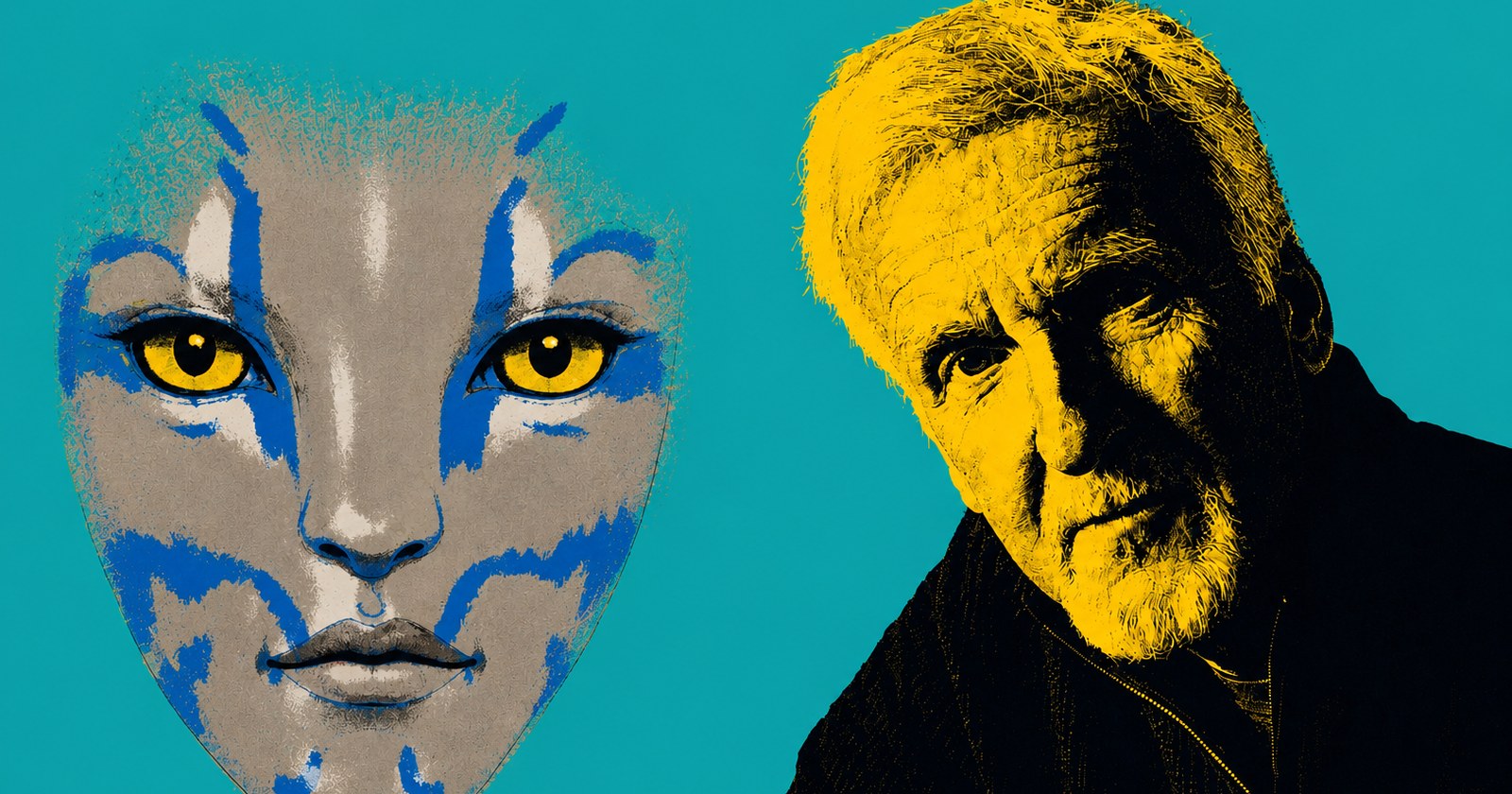
In 2005, Q'orianka Kilcher, then 14 years old, played Pocahontas in Terrence Malick's The New World. The performance launched her career and produced widely-circulated promotional photography of her as the historical Algonquian princess.
According to the federal complaint filed May 5, 2026 in the Central District of California, that was the same year James Cameron's design team began work on Avatar. The lawsuit alleges Cameron "extracted her facial features" from a published still of her in The New World and "directed his design team to use it as the foundation for the character of Neytiri."
The complaint walks through what it claims is a full pipeline of unauthorized use:
- Production sketches and concept art derived from Kilcher's face
- Sculpted three-dimensional maquettes built from those sketches
- Laser-scanned high-resolution digital models of those maquettes
- Distribution of the digital model to multiple visual-effects vendors who rendered Neytiri's final on-screen appearance, on movie posters, and on global merchandise
The complaint allegedly includes excerpts from interviews between Cameron and his production team that mention Kilcher by name and describe how her likeness was used as inspiration for the character ultimately performed on-screen by Zoe Saldaña.
The deepfake-statute angle. Beyond classic right-of-publicity theory, the complaint alleges the use violated California's recently enacted deepfake statute — specifically because a minor's likeness (Kilcher was 14) was used to build a digital model that was later rendered into intimate / romantic on-screen scenes as the adult character Neytiri. That's a novel application of a statute originally drafted with deepfake pornography and AI-generated political content in mind.
- 01Right of publicity — California common-law and statutory (Cal. Civ. Code §3344) misappropriation of name, image, likeness for commercial use without consent.
- 02California deepfake-statute violation — minor's likeness used in digital pipeline ultimately rendered into adult romantic/intimate scenes.
- 03Unfair competition — UCL §17200 / Lanham Act false-association theory.
- 04Unjust enrichment — defendants reaped roughly $3B in worldwide grosses from a likeness pipeline they never licensed.
This case is a landmark test for digital-likeness rights in the AI era. The Avatar franchise has earned nearly $3 billion worldwide; if Kilcher prevails on disgorgement, the math is unprecedented for a right-of-publicity case.
The deepfake-statute claim is the part to watch most closely. Right-of-publicity law has always covered photographs, voice and obvious imitations. But CGI characters built from a minor's facial scan — rendered into adult, intimate scenes — sit at exactly the intersection the deepfake statute was written to address, even though Avatar predates it. If the court accepts that the statute reaches conduct from the original 2009 production pipeline because the work is still being commercially exploited today, it opens up massive backward-looking liability for any film, game, or media that built characters from real people's biometric data.
And the human-rights through-line: an Indigenous actor alleging that an Indigenous-coded character (Neytiri, the Na'vi) was built from a teenage Indigenous face without consent — that frame travels far beyond the courtroom.