May 26 · MTD Bombshell: Swift's legal team drops a 33-page motion to dismiss (Doc 44) — two-pronged attack on all claims. Shotgun pleading + no likelihood of confusion + no personal jurisdiction. Rogers v. Grimaldi First Amendment defense reserved for later.
May 26 · Noncompliance Notice: Flagg's counsel fires back same day (Doc 45). Swift's team admitted they skipped the Local Rule 7-3 meet-and-confer deadline — filed 3 days early to influence today's hearing. Flagg reserves FRCP 15 amendment rights.
May 27 · PI Hearing TODAY: 1:30 PM, Courtroom 5D, 350 W. First St., LA. Judge Serena R. Murillo presiding.
One day before the PI hearing, on May 26, 2026, Swift's legal team filed a 33-page motion to dismiss (Doc 44) — a two-pronged attack that could end the case entirely.
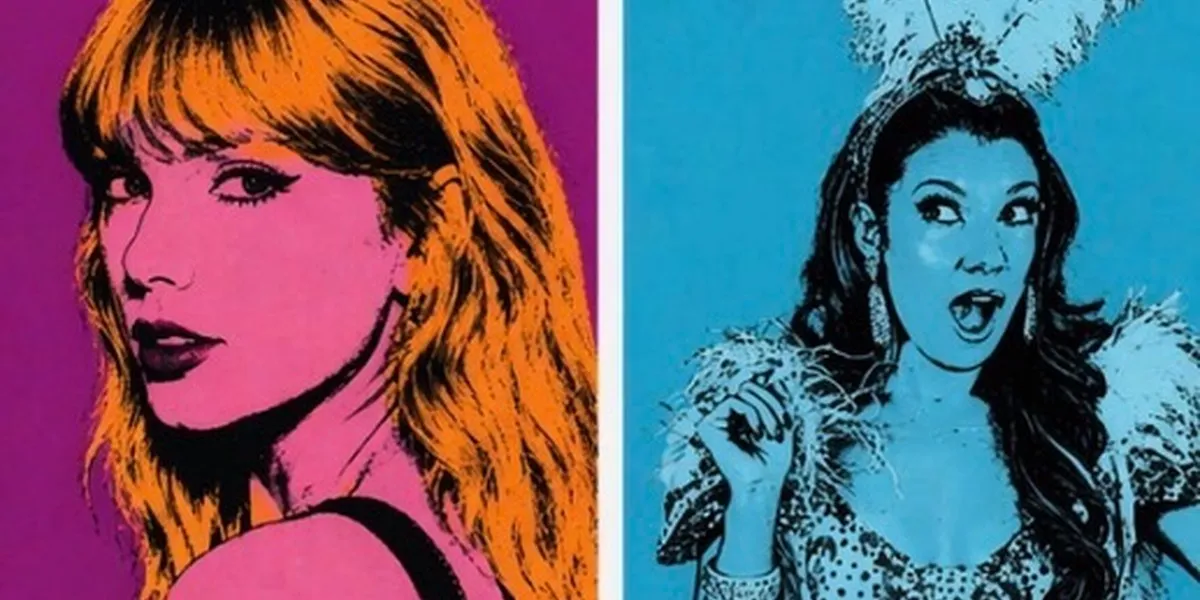
Prong one: failure to state a claim (Rule 12(b)(6)), targeting all four defendants. Venable LLP argues the complaint is a "shotgun pleading" — lumping Swift, TAS Rights Management, UMG, and Bravado together as "Defendants" 90+ times without specifying which entity did what. On the merits, the defense contends there is no likelihood of confusion: the goods and services are completely dissimilar (cabaret performances, a book, and a podcast versus an album, drinkware, candles, and apparel), the trade channels don't overlap, and the marks look different. The brief includes a side-by-side visual comparison of the two brands' identities. Swift's team also argues the USPTO's refusal was merely a non-final office action on an intent-to-use filing that explicitly did not find confusion for the vast majority of goods classes. On Flagg's California UCL claim, the defense argues the statute cannot apply extraterritorially to a Nevada plaintiff alleging no California-based injury.
Prong two: no personal jurisdiction (Rule 12(b)(2)), targeting Swift and TAS Rights Management only. The motion argues Swift is domiciled in Tennessee — supported by a sworn declaration from her business manager — and TASRM is a Tennessee LLC. Property ownership in California doesn't establish general jurisdiction. On specific jurisdiction, the defense argues the Calder effects test isn't met: no purposeful direction at California tied to the album or its merchandise. Running an interactive online store alone doesn't constitute "express aiming."
A notable footnote reserves the Rogers v. Grimaldi First Amendment defense for later, characterizing the album and merchandise as expressive works entitled to heightened protection — but arguing the "obvious pleading failures" make it unnecessary now. Another footnote targets Flagg's brand activity: no scheduled performances, her book unavailable, no podcast episodes despite a teaser 9+ months ago, and no new content since September 2025 beyond social media posts referencing Swift's album.
The MTD hearing is set for August 5, 2026, 1:30 PM in the same Courtroom 5D — a second major hearing date on a separate track from the PI battle. The same day the MTD was filed, Judge Murillo granted the seal order (Dkt. 38), allowing defendants to file unredacted versions of two PI opposition declarations under seal while redacted versions remain on the public docket.
Also on May 26, Flagg's counsel fired back with a Notice Regarding Defendants' Noncompliance with Local Rule 7-3 (Doc 45). The filing highlights that Swift's team admitted in their own declaration they did not complete the required meet-and-confer seven days before filing the MTD. The parties conferred May 22 — making May 29 the earliest compliant filing date — but defendants filed four days early. Their counsel's declaration acknowledged they did so to ensure the court would have the MTD before the PI hearing. Flagg reserves all rights to oppose the motion and to amend under Fed. R. Civ. P. 15.
Wade's April 7 motion for a preliminary injunction set off the main event in this case. On May 6, 2026, Swift's legal team at Venable LLP (Max N. Wellman, J. Douglas Baldridge, Katherine Wright Morrone) filed a 34-page opposition laying out a multi-pronged defense. The centerpiece: unclean hands — Swift's lawyers argue Flagg deliberately associated herself with Swift and the album after it was announced, using Swift's music, trademarks, and intellectual property in 40+ social media posts without permission. They claim Flagg shifted her branding from pinks and yellows to a mint backdrop with elongated font mimicking the album's imagery, and launched a podcast four days after the album announcement copying Swift's artwork and taglines.
The opposition leans heavily on First Amendment protection under the Rogers v. Grimaldi test, arguing an album title is an artistic work entitled to heightened protection. On confusion, Swift's team walks through the Sleekcraft factors one by one, characterizing Flagg's mark as "suggestive" and "conceptually weak," and noting the two brands target entirely different markets — a Las Vegas cabaret show versus a global pop album. They cite the Lady Gaga Mayhem case (Lost Int'l v. Germanotta) as nearly identical precedent where the court denied an injunction.
Swift's team also argues no irreparable harm: Flagg waited eight months after the album's announcement before seeking emergency relief, undercutting any claim of urgency. On the balance of hardships, the opposition warns an injunction would be catastrophic — pulling an album that sold 4 million units in its first week, generated 681 million streams, topped 6 million annual sales, and made Swift the IFPI's biggest-selling artist globally for a sixth time. The bond requirement alone, they argue, would be staggering.
A week later, on May 13, Flagg's counsel Jaymie Parkkinen fired back with a targeted 10-page response to Swift's evidentiary objections. The filing defends Exhibits 16–33 — social media posts showing consumer confusion — arguing they aren't hearsay under Fed. R. Evid. 801(c) (offered to show how consumers use the marks, not for truth of the matter). Flagg's team also turns the screws on Swift's own evidence, calling out Exhibit 84 as an 11-page brief disguised as an exhibit — a move they say violates the court's 25-page brief limit. The PI hearing is now confirmed for May 27, 2026, 1:30 PM, Courtroom 5D.
In 2014, Las Vegas performer Maren Wade (née Flagg) launched her “Confessions of a Showgirl” column in Las Vegas Weekly. By 2015 the trademark was registered with the USPTO and eventually achieved incontestable status — the strongest protection available under the Lanham Act.
In August 2025, Taylor Swift announced The Life of a Showgirl. The album debuted in October with 4 million units in its first week and topped the Billboard 200. The USPTO then refused Swift’s trademark application, citing Flagg’s existing mark as a likelihood-of-confusion bar.
Flagg filed suit on March 30, 2026 in C.D. California, followed by a motion for preliminary injunction on April 7.
This case sits at the intersection of artistic freedom and trademark law. A performer who spent 12 years building a brand is up against the world’s biggest pop star. The outcome could shape how courts handle trademark diligence when a global celebrity’s project collides with an independent creator’s established mark — and whether sheer commercial power can effectively overwhelm a smaller brand holder’s rights.